Director: David Anspaugh
Starring:
Genre: Drama
Studio: Theatrical: Rated:
Languages (Country): English ()
Summary: One of the most rousingly enjoyable sports movies ever made, this small-town drama tells the story of the Hickory Huskers, an underdog basketball team from a tiny Indiana high school that makes it all the way to the state championship tournament. It's a familiar story, but sensitive direction and a splendid screenplay helped make this one of the best films of 1986, highlighted by the superb performances of Gene Hackman as the Huskers' coach, and Oscar nominee Dennis Hopper as the alcoholic father of one of the team's key players. As the drama unfolds we come to realize that many of the characters (including Barbara Hershey as a schoolteacher with whom Hackman falls in love) are recovering from disappointing setbacks, and this depth of character is what makes the otherwise conventional basketball story so richly rewarding. Like "Rocky", "Rudy," and "Breaking Away", this is a quintessentially American movie about beating the odds and rising above one's own limitations. Just try to watch it without cheering! "--Jeff Shannon"
Director: Norman Jewison
Starring: Al Pacino, Jack Warden, John Forsythe, Lee Strasberg, Jeffrey Tambor
Genre: Drama
Studio: Sony Pictures Theatrical: 1979 Rated:
R
Languages (Country): English, French, Spanish ()
Summary: Al Pacino plays a Maryland lawyer who takes on a judicial system rife with dealmaking in this awkward blend of satire and sentimentality. Topical director Norman Jewison can't seem to help Pacino get comfortable with the mismatched material, which pushes the film into outrageousness at some turns and mawkishness at others. The script by Barry Levinson and Valerie Curtin is more an accumulation of random ideas and moments than a congruent story. However, it's interesting to see the large cast of good actors, most of whom hadn't become well known yet. (Christine Lahti made her film debut here.) Pacino gets to work for a second time (following "The Godfather II") with acting mentor Lee Strasberg. "--Tom Keogh"

Director: Spike Jonz
Starring: Orson Bean, Ned Bellamy, W. Earl Brown, Kevin Carroll, John Cusack
Genre: Drama
Studio: Polygram USA Video Theatrical: 1999 Rated:
R
Languages (Country): English ()
Summary: While too many movies suffer the fate of creative bankruptcy, "Being John Malkovich" is a refreshing study in contrast, so bracingly original that you'll want to send director Spike Jonze and screenwriter Charlie Kaufman a thank-you note for restoring your faith in the enchantment of film. Even if it ultimately serves little purpose beyond the thrill of comedic invention, this demented romance is gloriously entertaining, spilling over with ideas that tickle the brain and even touch the heart. That's to be expected in a movie that dares to ponder the existential dilemma of a forlorn puppeteer (John Cusack) who discovers a metaphysical portal into the brain of actor John Malkovich.
The puppeteer's working as a file clerk on the seventh-and-a-half floor of a Manhattan office building; this idea alone might serve as the comedic basis for an entire film, but Jonze and Kaufman are just getting started. Add a devious coworker (Catherine Keener), Cusack's dowdy wife (a barely recognizable Cameron Diaz), and a business scheme to capitalize on the thrill of being John Malkovich, and you've got a movie that just gets crazier as it plays by its own outrageous rules. Malkovich himself is the film's pièce de résistance, riffing on his own persona with obvious delight and--when he enters his own brain via the portal--appearing with multiple versions of himself in a tour-de-force use of digital trickery. Does it add up to much? Not really. But for 112 liberating minutes, "Being John Malkovich" is a wild place to visit. "--Jeff Shannon"

Director: Ridley Scott
Starring: Harrison Ford, Rutger Hauer, Sean Young, Edward James Olmos, M. Emmet Walsh
Genre: Drama
Studio: Warner Home Video Theatrical: 1982 Rated:
R
Languages (Country): English ()
Summary: When Ridley Scott's cut of "Blade Runner" was finally released in 1993, one had to wonder why the studio hadn't done it right the first time--11 years earlier. This version is so much better, mostly because of what's been eliminated (the ludicrous and redundant voice-over narration and the phony happy ending) rather than what's been added (a bit more character development and a brief unicorn dream). Star Harrison Ford originally recorded the narration under duress at the insistence of Warner Bros. executives who thought the story needed further "explanation"; he later confessed that he thought if he did it badly they wouldn't use it. (Moral: Never overestimate the taste of movie executives.) The movie's spectacular futuristic vision of Los Angeles--a perpetually dark and rainy metropolis that's the nightmare antithesis of "Sunny Southern California"--is still its most seductive feature, an otherworldly atmosphere in which you can immerse yourself. The movie's shadowy visual style, along with its classic private-detective/murder-mystery plot line (with Ford on the trail of a murderous android, or "replicant"), makes "Blade Runner" one of the few science fiction pictures to legitimately claim a place in the film noir tradition. And, as in the best noir, the sleuth discovers a whole lot more (about himself and the people he encounters) than he anticipates.... With Sean Young, Edward James Olmos, Daryl Hannah, Rutger Hauer, and M. Emmet Walsh. "--Jim Emerson"
Director: Andy Wachowski & Larry Wachowski
Starring:
Genre: Drama
Studio: MISC Theatrical: 1996 Rated:
Languages (Country): English, French ()
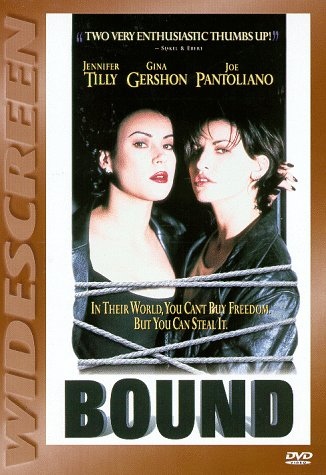
Summary: Destined for cult status, this provocative thriller offers a grab bag of genres (gangster movie, comedy, sexy romance, crime caper) and tops it all off with steamy passion between lesbian ex-con Corky (Gina Gershon) and a not-so-ditzy gun moll named Violet (Jennifer Tilly), who meets Corky and immediately tires of her mobster boyfriend (Joe Pantoliano). Desperate to break away from the Mob's influence and live happily ever after, the daring dames hatch a plot to steal $2 million of Mafia money. Their scheme runs into a series of escalating complications, until their very survival depends on split-second timing and criminal ingenuity. Simultaneously violent, funny, and suspenseful, "Bound" is sure to test your tolerance for bloodshed, but the film is crafted with such undeniable skill that several critics (including Roger Ebert) placed it on their top-ten lists for 1996. "--Jeff Shannon"

Director: Kimberly Peirce
Starring: Hilary Swank, Chloë Sevigny, Peter Sarsgaard, Brendan Sexton III, Alicia Goranson
Genre: Drama
Studio: Fox Searchlight Pictures Theatrical: 1999 Rated:
R
Languages (Country): English ()
Summary: When Brandon Teena, a young man with an infectious, aw-shucks grin and an angelic face that's all angles, wanders into Falls City, Nebraska, he takes to the town like it's a second skin. In little time he's fallen in with a gang of goofy if temperamental redneck boys, found himself a girlfriend, and befriended enough people to form something of a small family. In fact, it's the best time Brandon's ever had. However, there are shadows looming over Brandon's life: a court date for grand theft auto, a checkered criminal record, and a seemingly innocuous speeding ticket that could prove to be his undoing. Why? Because as it turns out, Brandon Teena is actually Teena Brandon, a woman masquerading as a man.
This fascinating story was based on real-life events (as documented in "The Brandon Teena Story") that occurred in 1993 and ended in tragedy: Brandon's rape and murder by two of his supposed friends. Despite this horrible outcome, however, in the hands of director Kimberly Peirce (who cowrote the unfettered screenplay with Andy Bienen), Brandon's story becomes not oppressive or preachy, but rather oddly and touchingly transcendent, anchored by Hilary Swank's phenomenal, unsentimental performance. Swank inhabits Brandon's contradictions and passions with a natural vitality most actresses would refuse to give themselves over to. Brandon's deception is doomed from the start, but Swank's enthusiasm is infectious, and when Brandon starts romancing the sloe-eyed Lana (a pitch-perfect Chloë Sevigny), he finds a soul mate who wants to transcend boundaries and fated identities as much as he does. The last part of the film, when Brandon's true identity is discovered, is truly painful to watch, but in between the agony there are touching moments of sweetness between Brandon and Lana, who wrestles with the truth of who Brandon actually is. You'll come away from "Boys Don't Cry" with affection and respect for Brandon, not pity. "--Mark Englehart"
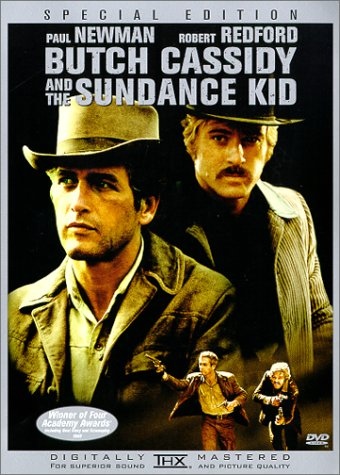
Director: George Roy Hill, Robert Crawford (IV)
Starring: Katharine Ross, George Roy Hill, William Goldman, Paul Newman, Robert Redford
Genre: Drama
Studio: 20th Century Fox Theatrical: 1969 Rated:
PG
Languages (Country): English, French ()
Summary: How do you ensure somebody's legacy as a hero? In the good old days, you wrote a book. Nowadays, you make a movie - and if you're lucky and it's really, really successful, you can retrospectively even make legends out of dangerous criminals. Not that that always works, of course. But with two great actors with instant chemistry (Paul Newman and Robert Redford), a script (by William Goldman) bursting with one-liners making the audience bowl over laughing every other minute, without once derailing into slapstick, a director's (George Roy Hill's) ingenious use of the occasion to turn a whole genre on its head, and some of the world's most beautiful locations, filmed by an exceptional cinematographer (Conrad Hall) ... you just may pull it off. Case in point: "Butch and Sundance."
While Butch Cassidy (Robert LeRoy Parker) was known as the Old West's Robin Hood for his charm, masterly planning, avoidance of bloodshed - he really did claim he'd never shot anyone - and his stance for settlers' rights vis-a-vis the wealthy cattle barons, Sundance (Henry Longbaugh) had the reputation of a loner; a fast draw repeatedly in and out of prison before even turning twenty-one. After several of their Wild Bunch/Hole in the Wall Gang associates had seen the short end of the stick in various encounters with the law, Butch and Sundance determined things were getting too hot in the West and, unlike the outlaws who not much earlier had stood it out until the end (Billy the Kid, the James Gang and the O.K. Corral gunfighters), decided to head for South America. With a woman named Etta Place, possibly a teacher as portrayed here or, perhaps more likely, a prostitute, they first spent several years farming in Argentina - both had done cattle work before turning to robbery, although in the form of rustling (stealing unbranded cattle) - but eventually reverted to their more profitable, preferred occupation. Most sources believe they died in a 1909 shootout with the Bolivian military in a town named San Vicente; others, however, claim either or both escaped alive, returned to the States under assumed names and died there (Sundance in Casper, WY in 1957 and Cassidy, according to his sister, in Spokane, WA, in 1937).
While their decision to leave the West instead of duking it out with the law and the mystery surrounding their deaths would already have made for a great movie, director Hill cleverly used the material for a 180-degree-turn on the Western genre. The opening credits roll next to sepia-tinged silent shots depicting a Hole in the Wall Gang train robbery, followed by the bold claim that "most of what follows is true" - which in itself couldn't be further from the truth. What does follow is a wild ride from the Outlaw Trail to Bolivia ... during which our heroes aren't getting rid of their pursuers, no Western music with guitars and harmonicas accompanies them but Burt Bacharach's multiple-award-winning, deliberately anachronistic, upbeat score (plus "Raindrops Are Falling on My Head" during the most romantic scene - raindrops???), a knife fight is settled by a kick in the groin, and a marshal trying to assemble a posse first meets with a lackluster population, neither willing to bring their own horses and guns nor clamoring to be supplied with such by him, and in short order sees his meeting usurped by a bicycle salesman. Add to that Oscar-winning cinematography, repeatedly using black-and-white lighting techniques even after the film's switch to color (e.g. in Sundance's first visit with Etta), reverse lighting to make daytime shots look like nighttime (during several scenes of the pursuit) and sepia-tinted shots for period feeling (besides the opening, also to sum up the trio's stay in New York), a Bolivian bank robbery with a crib sheet containing "specialized vocabulary" that Butch, contrary to initial claims, doesn't know in Spanish, and an immortalizing freeze-frame ending - and you have one heck of an entertaining movie, shot in some of the West's most spectacular settings and in Mexico (as Bolivia's stand-in).
"Butch and Sundance" turned Redford into a megastar - Hill lobbied hard for the then-perceived "playboy"'s casting, and his instincts proved so dead-on that Newman's entourage became worried the movie's expected primary star would be sidelined (a feeling never shared by Newman himself, though, who has been friends with Redford ever since). In a twist worthy of Goldman's Oscar-winning screenplay, fearsome loner Sundance became one of Redford's most popular roles, and his independent film festival's namesake. The movie renewed popular interest in the Outlaw Trail, which Redford himself traveled later, too (chronicled in a fascinating, alas out-of-print book). Its script is littered with memorable one-liners; from both heroes' "Who *are* those guys??" to Butch's comments on the small price to pay for beauty, on Sundance's gun-prowess ("like I've been telling you - over the hill"), on vision, bifocals and Bolivia, on Sundance's asking Etta (Katherine Ross) to accompany them, although if she'll ever "whine or make a nuisance," he'll be "dumping her flat" ("Don't sugarcoat it like that, Kid ... tell her straight!") and his downplaying the final shootout because their archenemy LaForce isn't there; Sundance's "You just keep thinking, Butch," his comments on the secret of his gambling success (prayer), on not being picky about women (followed by a litany of required attributes), on the excessive use of dynamite, and his one weakness ("I can't swim!!"); and finally Strother Martin/mine-owner Percy Garris's deadpan delivery of the Shanghai Rooster song, of "Morons ... I've got morons on my team" and his assertion not to be crazy but merely colorful. The famous freeze-frame ending has repeatedly been cited, both cinematographically (e.g. "Thelma and Louise") and in dialogue (e.g. 1998's "Negotiator"). And although initially almost uniformly panned by critics, the movie won quadruple Oscars and multiple other awards. In true Hollywood fashion, it has made two fearsome outlaws legends forever ... and in the process, also won legendary status itself.
Also recommended:
The Outlaw Trail: A Journey Through Time
Digging up Butch and Sundance (Second Edition)
Butch Cassidy: A Biography (Bison Book)
Hud
Jeremiah Johnson
The Sting (Universal Legacy Series)
Adventures in the Screen Trade

Director: Michael Curtiz
Starring: Mischa Auer, Leon Belasco, Ingrid Bergman, Oliver Blake, Monte Blue
Genre: Drama
Studio: MGM (Video & DVD) Theatrical: 1942 Rated:
PG
Languages (Country): English, French ()
Summary: A truly perfect movie, the 1942 "Casablanca" still wows viewers today, and for good reason. Its unique story of a love triangle set against terribly high stakes in the war against a monster is sophisticated instead of outlandish, intriguing instead of garish. Humphrey Bogart plays the allegedly apolitical club owner in unoccupied French territory that is nevertheless crawling with Nazis; Ingrid Bergman is the lover who mysteriously deserted him in Paris; and Paul Heinreid is her heroic, slightly bewildered husband. Claude Rains, Sydney Greenstreet, Peter Lorre, and Conrad Veidt are among what may be the best supporting cast in the history of Hollywood films. This is certainly among the most spirited and ennobling movies ever made. The DVD release has theatrical trailers, a related documentary, optional French soundtrack, and optional English and French subtitles. "--Tom Keogh"
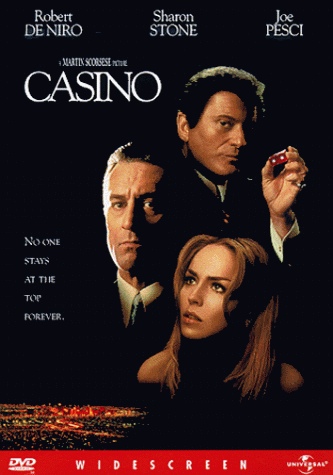
Director: Martin Scorsese
Starring: Robert De Niro, Sharon Stone, Joe Pesci, James Woods, Frank Vincent
Genre: Drama
Studio: Universal Home Video Theatrical: 1995 Rated:
R
Languages (Country): English, French ()
Summary: Director Martin Scorsese reunites with members of his "GoodFellas" gang (writer Nicholas Pileggi; actors Robert De Niro, Joe Pesci, and Frank Vincent) for a three-hour epic about the rise and fall of mobster Sam "Ace" Rothstein (De Niro), a character based on real-life gangster Frank "Lefty" Rosenthal. (It's modeled after on "Wiseguy" and "GoodFellas" and Pileggi's true crime book "Casino: Love and Honor in Las Vegas".) Through Rothstein, the picture tells the story of how the Mafia seized, and finally lost control of, Las Vegas gambling. The first hour plays like a fascinating documentary, intricately detailing the inner workings of Vegas casinos. Sharon Stone is the stand out among the actors; she nabbed an Oscar nomination for her role as the voracious Ginger, the glitzy call girl who becomes Rothstein's wife. The film is not as fast paced or gripping as Scorsese's earlier gangster pictures ("Mean Streets" and "GoodFellas"), but it's still absorbing. And, hey--it's Scorsese! "--Jim Emerson"

Director: Roman Polanski
Starring: Richard Bakalyan, Faye Dunaway, Jerry Fujikawa, Bruce Glover, John Hillerman
Genre: Drama
Studio: Paramount Theatrical: 1974 Rated:
R
Languages (Country): English, French ()
Summary: Roman Polanski's brooding film noir exposes the darkest side of the land of sunshine, the Los Angeles of the 1930s, where power is the only currency--and the only real thing worth buying. Jack Nicholson is J.J. Gittes, a private eye in the Chandler mold, who during a routine straying-spouse investigation finds himself drawn deeper and deeper into a jigsaw puzzle of clues and corruption. The glamorous Evelyn Mulwray (a dazzling Faye Dunaway) and her titanic father, Noah Cross (John Huston), are at the black-hole center of this tale of treachery, incest, and political bribery. The crackling, hard-bitten script by Robert Towne won a well-deserved Oscar, and the muted color cinematography makes the goings-on seem both bleak and impossibly vibrant. Polanski himself has a brief, memorable cameo as the thug who tangles with Nicholson's nose. One of the greatest, most completely satisfying crime films of all time. "--Anne Hurley"
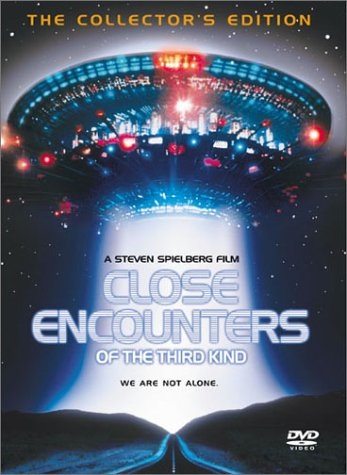
Director: Steven Spielberg
Starring: Norman Bartold, Shawn Bishop, Roberts Blossom, Robert Broyles, Adrienne Campbell
Genre: Drama
Studio: Sony Pictures Theatrical: 1977 Rated:
PG
Languages (Country): English, French, Portuguese, Spanish ()
Summary: Anybody who has written him off because of his string of stinkers--or anybody who's too young to remember "The Goodbye Girl"--may be shocked at the accomplishment and nuance of Richard Dreyfuss's performance in "Close Encounters of the Third Kind". Here, he plays a man possessed; contacted by aliens, he (along with other members of the "chosen") is drawn toward the site of the incipient landing: Devil's Tower, in rural Wyoming. As in many Spielberg films, there are no personalized enemies; the struggle is between those who have been called and a scientific establishment that seeks to protect them by keeping them away from the arriving spacecraft. The ship, and the special effects in general, are every bit as jaw-dropping on the small screen as they were in the theater (well, almost). Released in 1977 as a cerebral alternative to the swashbuckling science fiction epics then in vogue, "Close Encounters" now seems almost wholesome in its representation of alien contact and interested less in philosophizing about extraterrestrials than it is in examining the nature of the inner "call." Ultimately a motion picture about the obsession of the driven artist or determined visionary, "Close Encounters" comes complete with the stock Spielberg wives and girlfriends who seek to tether the dreamy, possessed protagonists to the more mundane concerns of the everyday. So a spectacular, seminal motion picture indeed, but one with gender politics that are all too terrestrial. "--Miles Bethany"

Director: Robert Zemeckis
Starring: Jodie Foster, Matthew McConaughey, Jena Malone, Geoffrey Blake, William Fichtner
Genre: Drama
Studio: Warner Home Video Theatrical: 1997 Rated:
PG
Languages (Country): English ()
Summary: The opening and closing moments of Robert ("Forrest Gump") Zemeckis's "Contact" astonish viewers with the sort of breathtaking conceptual imagery one hardly ever sees in movies these day--each is an expression of the heroine's lifelong quest (both spiritual and scientific) to explore the meaning of human existence through contact with extraterrestrial life. The movie begins by soaring far out into space, then returns dizzyingly to earth until all the stars in the heavens condense into the sparkle in one little girl's eye. It ends with that same girl as an adult (Jodie Foster)--her search having taken her to places beyond her imagination--turning her gaze inward and seeing the universe in a handful of sand. "Contact" traces the journey between those two visual epiphanies. Based on Carl Sagan's novel, "Contact" is exceptionally thoughtful and provocative for a big-budget Hollywood science fiction picture, with elements that recall everything from "2001" to "The Right Stuff". Foster's solid performance (and some really incredible alien hardware) keep viewers interested, even when the story skips and meanders, or when the halo around the golden locks of rising-star-of-a-different-kind Matthew McConaughey (as the pure-Hollywood-hokum love interest) reaches Milky Way-level wattage. Ambitious, ambiguous, pretentious, unpredictable--"Contact" is all of these things and more. Much of it remains open to speculation and interpretation, but whatever conclusions one eventually draws, "Contact" deserves recognition as a rare piece of big-budget studio filmmaking on a personal scale. "--Jim Emerson"
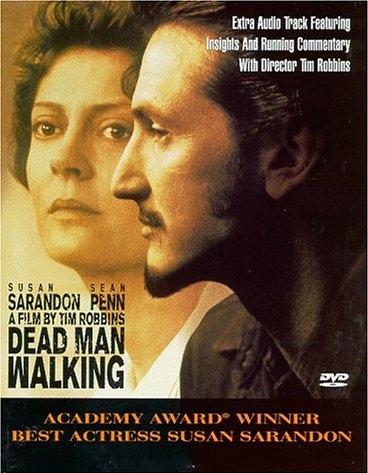
Director: Tim Robbins
Starring: Susan Sarandon, Sean Penn, Robert Prosky, Raymond J. Barry, R. Lee Ermey
Genre: Drama
Studio: Polygram Video Theatrical: 1996 Rated:
R
Languages (Country): English ()
Summary: Superbly adapted and directed by Tim Robbins from the nonfiction book of the same name by Sister Helen Prejean, this spiritually enlightened drama is too intelligent to traffic in polemics or self-righteous pontifications against the death penalty. But in examining the issue of capital punishment from a humanitarian perspective, the film urges thoughtful reflection on the justifications for legally ending a human life. Although it features a fine supporting cast, the film maintains its sharp focus through flawless lead performances by Oscar-winner Susan Sarandon as the Catholic nun Prejean, and Sean Penn as the death-row killer she struggles to save. Robbins avoids a biased message, letting the movie examine both sides of the issue instead (R. Lee Ermey gives a fine performance as the grief-stricken father of one of Penn's victims). As the drama unfolds and Penn's execution deadline grows near, "Dead Man Walking" is graced by compelling depths of theme and character, achieving an emotional impact that demands further reflection and removes the stigma of piousness from socially conscious filmmaking. "--Jeff Shannon"
Director: Peter Weir
Starring: Robin Williams, Robert Sean Leonard, Ethan Hawke, Josh Charles, Gale Hansen
Genre: Drama
Studio: Walt Disney Video Theatrical: 1989 Rated:
PG
Languages (Country): English, French ()
Summary: Robin Williams stars as an English teacher who doesn't fit into the conservative prep school where he teaches, but whose charisma and love of poetry inspires several boys to revive a secret society with a bohemian bent. The script is well meaning but a little trite, though director Peter Weir ("The Truman Show") adds layers of emotional depth in scenes of conflict between the kids and adults. (A subplot involving one father's terrible pressure on his son--played by Robert Sean Leonard--to drop his interest in theater reaches heartbreaking proportions.) Williams is given plenty of latitude to work in his brand of improvisational humor, though it is all well-woven into his character's style of instruction. "--Tom Keogh"

Director: Barry Levinson
Starring: Michael Douglas, Demi Moore, Donald Sutherland, Caroline Goodall, Roma Maffia
Genre: Drama
Studio: Warner Home Video Theatrical: 1994 Rated:
R
Languages (Country): English, French ()
Summary: Michael Crichton's bestselling novel was both a high-tech thriller and source of controversy with its hot-button plot about a man's charge of sexual harassment against a female colleague and former lover. The movie, directed by Barry Levinson, turned these issues into a prurient thriller gussied up in glossy production values, virtual reality computer graphics, and steamy sex between Michael Douglas and Demi Moore. Having cornered the market on roles for men whose brains are located south of their waistline, Douglas is well cast as the computer-industry guy who loses a plush promotion to the opportunistic Moore, and he's perfected the expression of paranoid panic. If you don't think about it too much, this is one of those films that can draw you into its manipulative web and really grab your attention. "Disclosure" is more entertaining than thought provoking (because the filmmakers basically danced around the story's potential controversy), but there's enough star power and visual glitz to make this an enjoyable ride. "--Jeff Shannon"
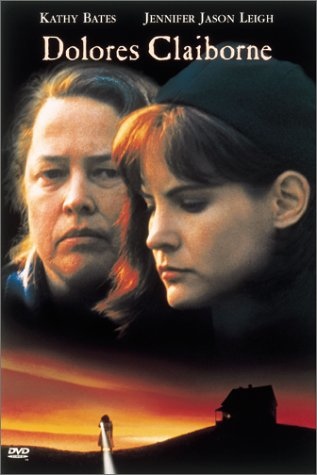
Director: Taylor Hackford
Starring: Kathy Bates, Jennifer Jason Leigh, Christopher Plummer, Judy Parfitt, David Strathairn
Genre: Drama
Studio: Warner Home Video Theatrical: 1995 Rated:
R
Languages (Country): English ()
Summary: Dark secrets, family torments, and two murders swirl around the stoic, hardened figure of Dolores Claiborne (Kathy Bates), a housekeeper accused of murdering her employer of 22 years. Then there was that timely accident that took Dolores's husband (David Strathairn) during the solar eclipse of 1975. Yet with all the somber suffering that follows Dolores like a miasma of pain, none of it compares with the heartache of a relationship she has with her grown daughter (Jennifer Jason Leigh). Although this flick is rife with horror, it is not of the supernatural kind, but rather of the torment only real people can impose on one another. The script is full of colorful language, and director Taylor Hackford successfully weaves several plot threads and psychological dilemmas throughout this engrossing tale without diminishing any of them. He not only culls intense performances from his cast, but he also brings to life the landscape around them. When the film's best-kept secret is finally given up, it occurs under the surreal backdrop of a solar eclipse that is a truly sensational bit of cinematography. "--Rochelle O'Gorman"

Director: Peter Weir
Starring: Jeff Bridges, Isabella Rossellini, Rosie Perez, Tom Hulce, John Turturro
Genre: Drama
Studio: Warner Home Video Theatrical: 1993 Rated:
R
Languages (Country): English, French ()
Summary: When Max Klein (Jeff Bridges) finds himself facing imminent death as his plane hurls toward the ground, he finds inner calm and release from fear in his acceptance of his own unavoidable end. His panic erased, he helps other passengers to relax, and when he survives the impact, to escape. What follows is his difficult and complex journey back to emotional and spiritual equilibrium. Along the way he helps Carla (Rosie Perez), a woman smashed by the belief that her infant son's death in the accident was the direct result of her inability to hold him tightly enough, and alienates his wife, Laura (Isabella Rossellini), who tries desperately to understand what he's experiencing. Peter Weir's film is emotionally intense in an absolutely unsentimental way (very rare), and the complexity of the protagonist's experience is refreshing (if you don't mind feeling deeply). The handling of the crash sequences is chilling in an unsensational way, and the directing in general is a triumph of story-serving restraint. Not the usual Hollywood fare, but intensely rewarding for those who are tired of mind candy. "--James McGrath"
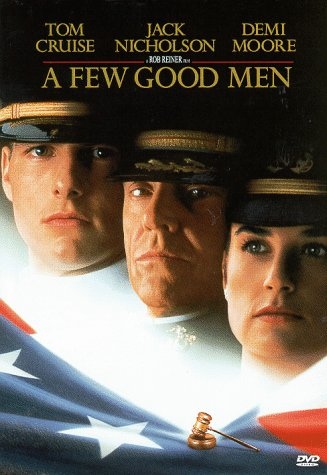
Director: Rob Reiner
Starring: Tom Cruise, Jack Nicholson, Demi Moore, Kevin Bacon, Kiefer Sutherland
Genre: Drama
Studio: Ingram Entertainment Theatrical: 1992 Rated:
R
Languages (Country): English, Spanish, French ()
Summary: A U.S. soldier is dead, and military lawyers Lieutenant Daniel Kaffee and Lieutenant Commander JoAnne Galloway want to know who killed him. "You want the truth?" snaps Colonel Jessup (Jack Nicholson). "You can't handle the truth!" Astonishingly, Jack Nicholson's legendary performance as a military tough guy in "A Few Good Men" really amounts to a glorified cameo: he's only in a few scenes. But they're killer scenes, and the film has much more to offer. Tom Cruise (Kaffee) shines as a lazy lawyer who rises to the occasion, and Demi Moore (Galloway) gives a command performance. Kevin Bacon, Kiefer Sutherland, J.T. Walsh, and Cuba Gooding Jr. (of "Jerry Maguire" fame) round out the superb cast. Director Rob Reiner poses important questions about the rights of the powerful and the responsibilities of those just following orders in this classic courtroom drama. "--Alan Smithee"
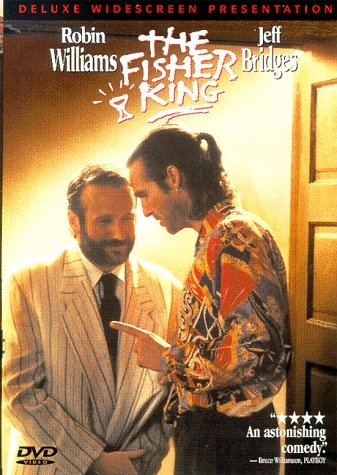
Director: Terry Gilliam
Starring: Jeff Bridges, Robin Williams, Mercedes Ruehl, Amanda Plummer, David Hyde Pierce
Genre: Drama
Studio: Sony Pictures Theatrical: 1991 Rated:
R
Languages (Country): English ()
Summary: Arthurian mythology and modern day decay seem perfect complements to each other in this Terry Gilliam drama/comedy/fantasy. Shock jock Jack Lucas (Jeff Bridges) makes an off-handed radio remark that causes a man to go on a killing spree, leaving Lucas unhinged with guilt. Lucas's later, chance meeting with Parry (Robin Williams), a homeless man suffering from dementia, gets him involved in the unlikely quest for the Holy Grail. The rickety, and patently unrealistic stand that insanity is just a wonderful place to be, and that the homeless are all errant knights, wears awfully thin, but there are numerous moments of sad grace and violent beauty in this film. The screenplay by Richard LaGravenese launched his successful career and his smart wordplay helped garner Mercedes Ruehl an Oscar as Lucas's girlfriend. "--Keith Simanton"
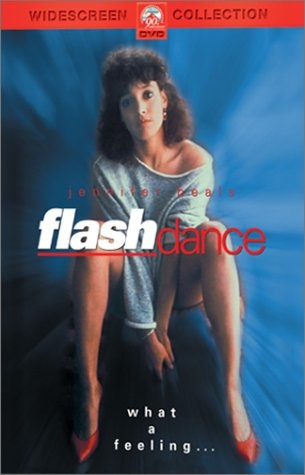
Director: Adrian Lyne
Starring: Belinda Bauer, Jennifer Beals, Bettina Birnbaum, Don Brockett, Philip Bruns
Genre: Drama
Studio: Paramount Theatrical: 1983 Rated:
R
Languages (Country): English, French ()
Summary: That Oscar-winning title song buzzes in your ears long after the movie has stopped. The attraction here is youthful spirit and a pulsating score, because the weak story is merely a conduit for the song-and-dance numbers. The plot is every young woman's daydream come true. Jennifer Beals holds down a macho job as a welder by day, but performs erotic dance numbers in a club at night. It's not a strip club, so her morality remains intact. She dates her wealthy boss (Michael Nouri) and practices hard for the day she can audition for the upscale, local dance school, even though she has no formal training. It is malarkey, of course, unless you view this as total romantic fantasy. It works because you are carried along by the sheer force of the energetic, boisterous, MTV-style imagery by director Adrian Lyne. Beals is a plus as the stubborn, pouty, somewhat eccentric young woman made all the more interesting for her driving ambition. In the end, she is aided by her Prince Charming, who arrives bearing favors. Mind you, this is not the same as a rescue, as Beals is one rather tough damsel who does just fine on her own. "--Rochelle O'Gorman"

Director: James Foley
Starring: Al Pacino, Jack Lemmon, Alec Baldwin, Alan Arkin, Ed Harris
Genre: Drama
Studio: Lions Gate Theatrical: 1992 Rated:
R
Languages (Country): English, French ()
Summary: Like moths to a flame, great actors gravitate to the singular genius of playwright-screenwriter David Mamet, who updated his Pulitzer Prize-winning play for this all-star screen adaptation. The material is not inherently cinematic, so the movie's greatest asset is Mamet's peerless dialogue and the assembly of a once-in-a-lifetime cast led by Al Pacino, Jack Lemmon, and Alec Baldwin (the last in a role Mamet created especially for the film). Often regarded as a critique of the Reagan administration's impact on the American economy, the play and film focus on a competitive group of real estate salesmen who've gone from feast to famine in a market gone cold. When an executive "motivator" (Alec Baldwin) demands a sales contest among the agents in the cramped office, the stakes are critically high: any agent who fails to meet his quota of sales "leads" (i.e., potential buyers) will lose his job. This intense ultimatum is a boon for the office superstar (Pacino), but a once-successful salesman (Lemmon) now finds himself clinging nervously to faded glory. Political and personal rivalries erupt under pressure when the other agents (Alan Arkin, Ed Harris) suspect the office manager (Kevin Spacey) of foul play. This cauldron of anxiety, tension, and sheer desperation provides fertile soil for Mamet's scathingly rich dialogue, which is like rocket fuel for some of the greatest actors of our time. Pacino won an Oscar nomination for his volatile performance, but it's Lemmon who's the standout, doing some of the best work of his distinguished career. Director James Foley shapes Mamet's play into a stylish, intensely focused film that will stand for decades as a testament to its brilliant writer and cast. "--Jeff Shannon"

Director: Victor Fleming, Sam Wood, George Cukor
Starring: Clark Gable, Vivien Leigh, Leslie Howard, Olivia de Havilland, Thomas Mitchell
Genre: Drama
Studio: MGM (Video & DVD) Theatrical: 1939 Rated:
G
Languages (Country): English ()
Summary: David O. Selznick wanted "Gone with the Wind" to be somehow more than a movie, a film that would broaden the very idea of what a film could be and do and look like. In many respects he got what he worked so hard to achieve in this 1939 epic (and all-time box-office champ in terms of tickets sold), and in some respects he fell far short of the goal. While the first half of this Civil War drama is taut and suspenseful and nostalgic, the second is ramshackle and arbitrary. But there's no question that the film is an enormous achievement in terms of its every resource--art direction, color, sound, cinematography--being pushed to new limits for the greater glory of telling an American story as fully as possible. Vivien Leigh is still magnificently narcissistic, Olivia de Havilland angelic and lovely, Leslie Howard reckless and aristocratic. As for Clark Gable: we're talking one of the most vital, masculine performances ever committed to film. "--Tom Keogh"

Director: Gus Van Sant
Starring: Robin Williams, Matt Damon, Ben Affleck, Stellan Skarsgård, Minnie Driver
Genre: Drama
Studio: Miramax Theatrical: 1998 Rated:
R
Languages (Country): English ()
Summary: Robin Williams won the Oscar for Best Supporting Actor, and actors Matt Damon and Ben Affleck nabbed one for Best Original Screenplay, but the feel-good hit "Good Will Hunting" triumphs because of its gifted director, Gus Van Sant. The unconventional director ("My Own Private Idaho", "Drugstore Cowboy") saves a script marred by vanity and clunky character development by yanking soulful, touching performances out of his entire cast (amazingly, even one by Williams that's relatively schtick-free). Van Sant pulls off the equivalent of what George Cukor accomplished for women's melodrama in the '30s and '40s: He's crafted an intelligent, unabashedly emotional male weepie about men trying to find inner-wisdom.
Matt Damon stars as Will Hunting, a closet math genius who ignores his gift in favor of nightly boozing and fighting with South Boston buddies (co-writer Ben Affleck among them). While working as a university janitor, he solves an impossible calculus problem scribbled on a hallway blackboard and reluctantly becomes the prodigy of an arrogant MIT professor (Stellan Skarsgård). Damon only avoids prison by agreeing to see psychiatrists, all of whom he mocks or psychologically destroys until he meets his match in the professor's former childhood friend, played by Williams. Both doctor and patient are haunted by the past, and as mutual respect develops, the healing process begins. The film's beauty lies not with grand climaxes, but with small, quiet moments. Scenes such as Affleck's clumsy pep talk to Damon while they drink beer after work, or any number of therapy session between Williams and Damon offer poignant looks at the awkward ways men show affection and feeling for one another. "--Dave McCoy"

Director: Hal Ashby
Starring: Harvey Brumfield, Eric Christmas, Bud Cort, Cyril Cusack, Gordon Devol
Genre: Drama
Studio: PBS Home Video Theatrical: 1971 Rated:
PG
Languages (Country): English, French ()
Summary: Black comedies don't come much blacker than this cult favorite from 1972, and they don't come much funnier, either. It seemed that director Hal Ashby was the perfect choice to mine a mother lode of eccentricity from the original script by Colin Higgins, about the unlikely romance between a death-obsessed 19-year-old named Harold (Bud Cort) and a life-loving 79-year-old widow named Maude (Ruth Gordon). They meet at a funeral, and Maude finds something oddly appealing about Harold, urging him to "reach out" and grab life by the lapels as opposed to dwelling morbidly on mortality. Harold grows fond of the old gal--she's a lot more fun than the girls his mother desperately matches him up with--and together they make "Harold & Maude" one of the sweetest and most unconventional love stories ever made. Much of the earlier humor arises from Harold's outrageous suicide fantasies, played out as a kind of twisted parlor game to mortify his mother, who's grown immune to her strange son's antics. Gradually, however, the film's clever humor shifts to a brighter outlook and finally arrives at a point where Harold is truly happy to be alive. Featuring soundtrack songs by Cat Stevens, this comedy certainly won't appeal to all tastes (it was a box-office flop when first released), but if you're on its quirky wavelength, it might just strike you as one of the funniest movies you've ever seen. "--Jeff Shannon"

Director: Michael Mann
Starring: Russell Crowe, Al Pacino, Christopher Plummer, Diane Venora, Philip Baker Hall
Genre: Drama
Studio: Walt Disney Video Theatrical: 1999 Rated:
R
Languages (Country): English ()
Summary: As revisionist history, Michael Mann's intelligent docudrama "The Insider" is a simmering brew of altered facts and dramatic license. In a broader perspective, however, the film (cowritten with "Forrest Gump" Oscar-winner Eric Roth) is effectively accurate as an engrossing study of ethics in the corruptible industries of tobacco and broadcast journalism. On one side, there is Jeffrey Wigand (Russell Crowe), the former tobacco scientist who violated contractual agreements to expose Brown & Williamson's inclusion of addictive ingredients in cigarettes, casting himself into a vortex of moral dilemma. On the other side is "60 Minutes" producer Lowell Bergman (Al Pacino), whose struggle to report Wigand's story puts him at odds with veteran correspondent Mike Wallace (Christopher Plummer) and senior executives at CBS News.
As the urgency of the story increases, so does the film's palpable sense of paranoia, inviting favorable comparison to "All the President's Men". While Pacino downplays the theatrical excess that plagued him in previous roles, Crow is superb as a man who retains his tortured integrity at great personal cost. "The Insider" is two movies--a cover-up thriller and a drama about journalistic ethics--that combine to embrace the noble values personified by Wigand and Bergman. Even if the details aren't always precise (as Mike Wallace and others protested prior to the film's release), the film adheres to a higher truth that was so blatantly violated by tobacco executives seen in an oft-repeated video clip, lying under oath in the service of greed. "--Jeff Shannon"

Director: Edward Zwick
Starring: Brad Pitt, Anthony Hopkins, Aidan Quinn, Julia Ormond, Henry Thomas
Genre: Drama
Studio: Sony Pictures Theatrical: 1995 Rated:
R
Languages (Country): English, Spanish, French ()
Summary: A box-office hit when released in 1994, this sprawling, frequently overwrought familial melodrama may get sillier as its plot progresses, but it's the kind of lusty, character-based epic that Hollywood should attempt more often. It's also an unabashedly flattering star vehicle for Brad Pitt as Tristan--the rebellious middle son of a fiercely independent Montana rancher and military veteran (Anthony Hopkins)--who is routinely at odds with his more responsible older brother, Alfred (Aidan Quinn), and younger brother, Samuel (Henry Thomas). From the battlefields of World War I to his adventures as an oceangoing sailor, Tristan's life is full of personal torment, especially when he returns to Montana and finds himself competing with Alfred over Samuel's beautiful widow (Julia Ormond), whose passion for Tristan disrupts the already turbulent Ludlow clan. Under the wide-open canopy of Big Sky country, this operatic tale unfolds with all the bloodlust, tragedy, and scenery-chewing performances you'd expect to find in a hokey bestselling novel (in fact, it's based on the acclaimed novella by Jim Harrison), but it's a potent mix that's highly entertaining. Not surprisingly, John Toll won an Academy Award for his breathtaking outdoor cinematography. "--Jeff Shannon"

Director: John Huston
Starring: Humphrey Bogart, Mary Astor, Gladys George, Peter Lorre, Barton MacLane
Genre: Drama
Studio: Warner Home Video Theatrical: 1941 Rated:
Unrated
Languages (Country): English ()
Summary: Still the tightest, sharpest, and most cynical of Hollywood's official deathless classics, bracingly tough even by post-Tarantino standards. Humphrey Bogart is Dashiell Hammett's definitive private eye, Sam Spade, struggling to keep his hard-boiled cool as the double-crosses pile up around his ankles. The plot, which dances all around the stolen Middle Eastern statuette of the title, is too baroque to try to follow, and it doesn't make a bit of difference. The dialogue, much of it lifted straight from Hammett, is delivered with whip-crack speed and sneering ferocity, as Bogie faces off against Peter Lorre and Sydney Greenstreet, fends off the duplicitous advances of Mary Astor, and roughs up a cringing "gunsel" played by Elisha Cook Jr. It's an action movie of sorts, at least by implication: the characters always seem keyed up, right on the verge of erupting into violence. This is a turning-point picture in several respects: John Huston ("The African Queen") made his directorial debut here in 1941, and Bogart, who had mostly played bad guys, was a last-minute substitution for George Raft, who must have been kicking himself for years afterward. This is the role that made Bogart a star and established his trend-setting (and still influential) antihero persona. "--David Chute"
Director: Chuck Russell
Starring: Jim Carrey, Cameron Diaz, Peter Riegert, Peter Greene, Amy Yasbeck
Genre: Drama
Studio: New Line Cinema Theatrical: 1994 Rated:
PG-13
Languages (Country): ()
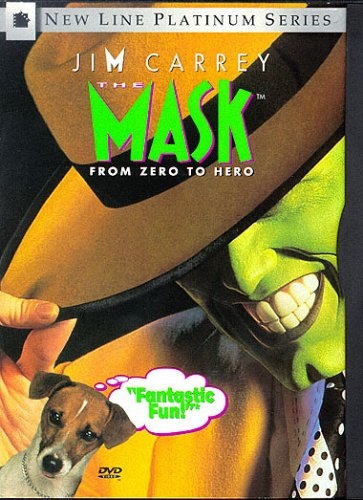
Summary: Sometimes it's hard to tell if "The Mask" (or Jim Carrey's in-your-face mugging in general) is actually funny, or just bizarre and grotesque. And sometimes it just doesn't matter. Carrey plays a shy, Jerry Lewis-like nerd who discovers an ancient mask that magically transforms him into a green-faced, zoot-suited Tex Avery cartoon character with no inhibitions. As Roger Ebert said of Carrey in "Ace Ventura: Pet Detective", the actor performs "as if he's being clocked on an Energy-O-Meter, and paid by the calorie expended." If that's your kind of humor, you'll love "The Mask"; if not, you may need a valium or two to sit through this one. "--Jim Emerson"

Director: Peter Weir
Starring: Harrison Ford, Helen Mirren, River Phoenix, Conrad Roberts, Andre Gregory
Genre: Drama
Studio: Warner Bros. Pictures Theatrical: 1986 Rated:
PG
Languages (Country): English, French ()
Summary: A year after his American film debut, Peter Weir reteamed with his "Witness" star (Harrison Ford) for a tricky adaptation of Paul Theroux's novel of a modern man who takes his family into the jungle. The results are mixed, but the film is galvanized by Ford's atypical performance as inventor/madman Allie Fox. Paul Schrader's script sets up Allie as a man who follows his idea: that America is dying and the real "four-in-the-morning courage" is found in returning to the essence of life, here the jungles of a fictional Central American country (it was shot in Belize). With his family in tow (including Helen Mirren and River Phoenix), Allie creates a utopia when his inventions create a local sensation, but seedier elements from bandits to evangelicals (led by Andre Gregory) take their toll. Certainly, it's hard to root for a central character who is unpleasant ("a know-it-all who is sometimes right," as one states), and the film's second half is not as interesting. But Weir's film is logical and true in its progression and, as usual, is beautifully crafted (he also reteams with the cinematographer, editor, and composer of "Witness"). Ford's rawness is reminiscent of many an actor's foray into the meaty role of an independent film--which this film is certainly not--and, unfortunately, it was not the direction he ultimately pursued. "--Doug Thomas"
Director: Wolfgang Petersen
Starring: Noah Hathaway, Barret Oliver, Tami Stronach, Gerald McRaney, Drum Garrett
Genre: Drama
Studio: Warner Home Video Theatrical: 1984 Rated:
PG
Languages (Country): English, French, Spanish ()
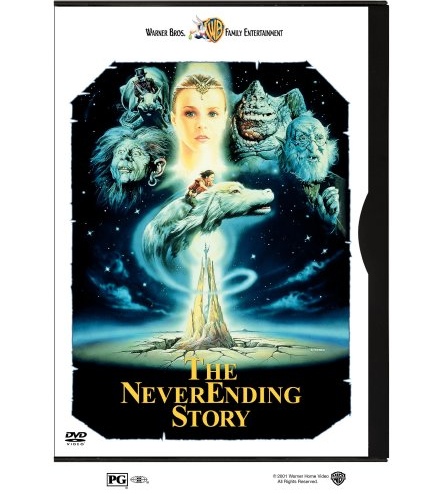
Summary: Wolfgang Petersen ("In the Line of Fire") made his first English-language film with this 1984 fantasy about a boy (Barret Oliver) visualizing the stories of a book he's reading. The imagined tale involves another boy, a warrior (Noah Hathaway), and his efforts to save the empire of Fantasia from a nemesis called the Nothing. Whether or not the scenario sticks in the memory, what does linger are the unique effects, which are not quite like anything else. Plenty of good fairy-tale characters and memorable scenes, and the film even encourages kids to read. "--Tom Keogh"
Director: Sydney Pollack
Starring: Meryl Streep, Robert Redford, Klaus Maria Brandauer, Michael Kitchen, Malick Bowens
Genre: Drama
Studio: Universal Studios Theatrical: 1985 Rated:
PG
Languages (Country): English, French ()
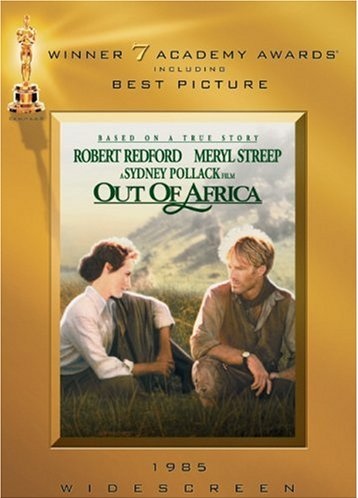
Summary: Sydney Pollack's 1985 multiple-Oscar winner is a sumptuous and emotionally satisfying film about the life of Danish writer Karen Blixen (Meryl Streep), better known as Isak Dinesen, who travels to Kenya to be with her German husband (Klaus Maria Brandauer) but falls for an English adventurer (Robert Redford). The film is slow in developing the relationship, but it is rich in beautiful images of Africa and in the romantic tone surrounding Blixen's gradual discovery of her life and voice. One downside: while we may all love Redford, he is as convincingly British as Kevin Costner is in "Robin Hood: Prince of Thieves". "--Tom Keogh"
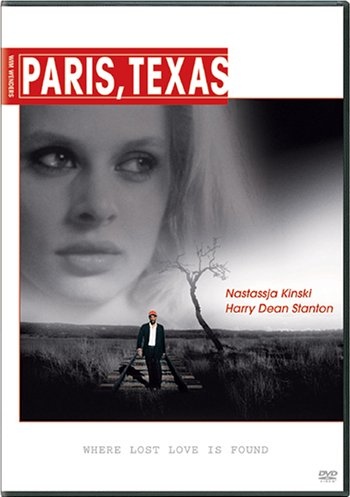
Director: Wim Wenders
Starring: Harry Dean Stanton, Sam Berry, Bernhard Wicki, Dean Stockwell, Aurore Clément
Genre: Drama
Studio: 20th Century Fox Theatrical: 1984 Rated:
R
Languages (Country): English ()
Summary: Something like a perfect artistic union is achieved in the major components of "Paris, Texas": the twang of Ry Cooder's guitar, the lonely light of Robbie Muller's camera, the craggy landscape of Harry Dean Stanton's face. In his greatest role, longtime character actor Stanton plays a man brought back to his old life after wandering in the desert (or somewhere) for four years. He has a 7-year-old son to get to know, and his wife has gone missing. The material is much in the wanderlust spirit of director Wim Wenders, working from a script by Sam Shepard and L.M. Kit Carson. If the long climactic conversation between Stanton and Nastassja Kinski renders the movie uneven and slightly inscrutable, it's hard to think of a more fitting ending--and besides, the achingly empty American spaces stick longer in the memory than the dialogue. Winner of the top prize at the 1984 Cannes Film Festival. "--Robert Horton"
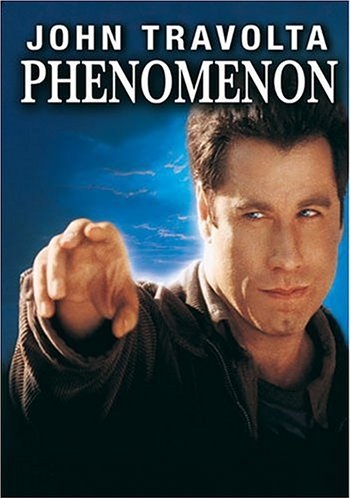
Director: Jon Turteltaub
Starring: John Travolta, Kyra Sedgwick, Forest Whitaker, Robert Duvall, Jeffrey DeMunn
Genre: Drama
Studio: Walt Disney Video Theatrical: 1996 Rated:
PG
Languages (Country): English, French ()
Summary: John Travolta's should've-been-nominated-for-an-Oscar performance is the best reason to see this largely moving work, which is a little reminiscent of the novel "Flowers for Algernon" (basis for the film "Charly"). Travolta plays a mechanic who sees a bright light in the sky one night and wakes up the next morning a genius, hungry for knowledge and so smart he figures out national defense secrets in his own living room (and gets in hot water for it). The more interesting drama, however, is not with the government but with the character's longtime neighbors and friends, who come to reject him for being different. Robert Duvall gives a stirring performance as a doctor who has known the hero all his life, and Kyra Sedgwick is very good as an ambivalent love interest. If you missed this one in the theaters, then you haven't seen one of Travolta's best performances since his comeback. The DVD release presents a widescreen image, optional French soundtrack, optional Spanish subtitles, and theatrical trailer. "--Tom Keogh"

Director: Sean Penn
Starring: Jack Nicholson, Benicio Del Toro, Patricia Clarkson, Beau Daniels, Dale Dickey
Genre: Drama
Studio: Warner Home Video Theatrical: 2001 Rated:
R
Languages (Country): English ()
Summary: Jack Nicholson is detective Jerry Black, a respected and well-liked veteran of the Reno police force retiring to a life of angling with more than a little apprehension. Thus he jumps into a murder case, the slaying of a little girl, a mere six hours from retirement and makes a promise to the grieving mother to catch the killer. As his partner (an effectively abrasive Aaron Eckhart) squeezes a confession out of the severely mentally handicapped suspect (a thoroughly unsettling performance by Benicio Del Toro), Jerry is convinced that they've got the wrong man.
As in Sean Penn's previous work, this is an actors' piece. Nicholson plays Jerry with restlessness under his easy-going, smiling calm; his patient fisherman's heart leaps at every nibble while he casts for a murder suspect. And Del Toro, Helen Mirren, Vanessa Redgrave, and Mickey Rourke make striking impressions in their single-scene appearances. Penn is less concerned with the mystery than the emotional turmoil and Jerry's state of mind, interrupting moments of calm with jagged cuts and discomforting images (including some especially disturbing crime scene photos). Jerry's instincts and methods are sound and his sensitivity is real--he takes in a battered single mom (Robin Wright Penn) and her little girl, and develops a rewarding family life--but his passion for justice turns to unhealthy, destructive obsession. That's ultimately what we're left with at the conclusion of this often off-putting but ultimately fascinating film. The truth will not always set you free. "--Sean Axmaker"
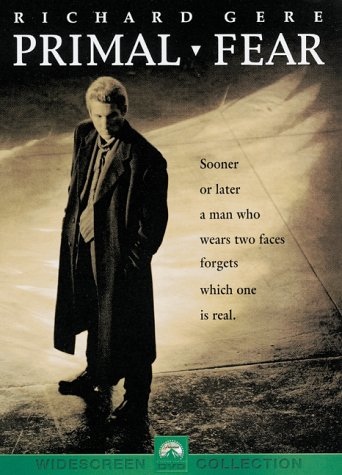
Director: Gregory Hoblit
Starring: Richard Gere, Laura Linney, Edward Norton, John Mahoney, Frances McDormand
Genre: Drama
Studio: Paramount Theatrical: 1996 Rated:
R
Languages (Country): English, French ()
Summary: Clever twists and a bona fide surprise ending make this an above-average courtroom thriller, tapping into the post-O.J. scrutiny of our legal system in the case of a hotshot Chicago defense attorney (Richard Gere) whose latest client is an altar boy (Edward Norton) accused of murdering a Catholic archbishop. The film uses its own manipulation to tell a story about manipulation, and when we finally discover who's been pulling the strings, the payoff is both convincing and pertinent to the ongoing debate over what constitutes truth in the American system of justice. Making an impressive screen debut that has since led to a stellar career, Norton gives a performance that rides on a razor's edge of schizophrenic pathology--his role is an actor's showcase, and without crossing over the line of credibility, Norton milks it for all it's worth. Gere is equally effective in a role that capitalizes on his shifty screen persona, and Laura Linney and Frances McDormand give memorable performances in their intelligently written supporting roles. "--Jeff Shannon"
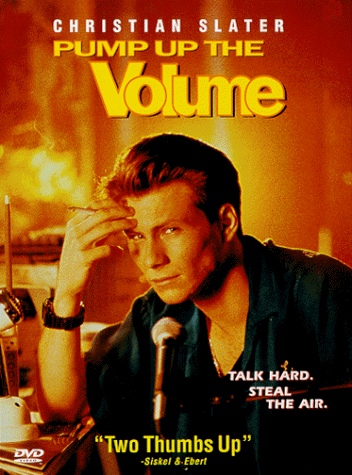
Director: Allan Moyle
Starring: Anthony Lucero, Andy Romano, Keith Stuart Thayer, Cheryl Pollak, Jeff Chamberlain
Genre: Drama
Studio: New Line Home Video Theatrical: 1990 Rated:
R
Languages (Country): English ()
Summary: In the suburban hinterlands of Arizona, pirate-radio DJ Hard Harry wages a one-man war against boredom from his bedroom transmitter by night. In between great Lenny Bruce-style stream-of-consciousness rants, Harry attacks the airwaves with the likes of the Descendents, Bad Brains, and Concrete Blonde, as well as occasionally kickin' it old school with some early hip-hop. By day, though, Hard Harry is Mark Hunter, a painfully shy new kid who's anonymous to the point of being invisible at Hubert Humphrey High School. Completely misunderstood by his '60s-era parents, Mark is desperate to keep his radio alter ego separate from his day-to-day persona, especially as his radio shows draw more attention from the authorities. Fellow misfit Nora (Samantha Mathis, in her first feature role) eventually discovers Hard Harry's true identity, much to Mark's chagrin, and the two of them become torchbearers against the stifling status quo of the town as they dodge the police, the school administration, and the FCC. There are familiar high school authority archetypes (the assistant principal with clip-on tie, lemon-yellow K-Mart short-sleeved dress shirt, military flattop, and bulky key ring) and a rather strained subplot of a corrupt school administration. Mainly, though, this is a rousing teen call-to-arms that showcases Slater's talents as he developed the cynical, sarcastic neo-Jack Nicholson delivery that would become his trademark. He's at his best during his radio monologues (making them truly seem ad-libbed), and his influences become clear as he checks out a copy of "How to Talk Dirty and Influence People" from the library. "--Jerry Renshaw"
Director: David Fincher
Starring: Morgan Freeman, Brad Pitt, Kevin Spacey, Gwyneth Paltrow, R. Lee Ermey
Genre: Drama
Studio: New Line Home Video Theatrical: 1995 Rated:
R
Languages (Country): ()
Summary: The most viscerally frightening and disturbing homicidal maniac picture since "The Silence of the Lambs", "Seven" is based on an idea that's both gruesome and ingenious. A serial killer forces each of his victims to die by acting out one of the seven deadly sins. The murder scene is then artfully arranged into a grotesque tableau, a graphic illustration of each mortal vice. From the jittery opening credits to the horrifying (and seemingly inescapable) concluding twist, director David Fincher immerses us in a murky urban twilight where everything seems to be rotting, rusting, or molding; the air is cold and heavy with dread. Morgan Freeman and Brad Pitt are the detectives who skillfully track down the killer--all the while unaware that he has been closing in on them, as well. Gwyneth Paltrow and Kevin Spacey are also featured, but it is director Fincher and the ominous, overwhelmingly oppressive atmosphere of doom that he creates that are the real stars of the film. It's a terrific date movie--for vampires. "--Jim Emerson"
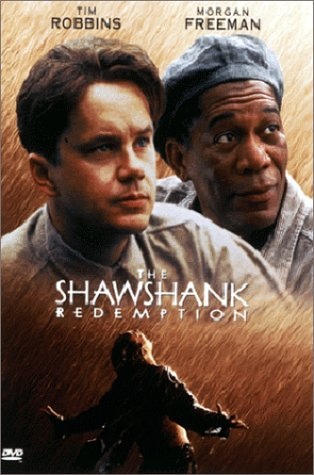
Director: Frank Darabont
Starring: Tim Robbins, Morgan Freeman, Bob Gunton, William Sadler, Clancy Brown
Genre: Drama
Studio: Castle Rock Theatrical: 1994 Rated:
R
Languages (Country): English, French ()
Summary: When this popular prison drama was released in 1994, some critics complained that the movie was too long (142 minutes) to sustain its story. Those complaints miss the point, because the passage of time is crucial to this story about patience, the squeaky wheels of justice, and the growth of a life-long friendship. Only when the film reaches its final, emotionally satisfying scene do you fully understand why writer-director Frank Darabont (adapting a novella by Stephen King) allows the story to unfold at its necessary pace, and the effect is dramatically rewarding. Tim Robbins plays a banker named Andy who's sent to Shawshank Prison on a murder charge, but as he gets to know a life-term prisoner named Red (Morgan Freeman), we realize there's reason to believe the banker's crime was justifiable. We also realize that Andy's calm, quiet exterior hides a great reserve of patience and fortitude, and Red comes to admire this mild-mannered man who first struck him as weak and unfit for prison life. So it is that "The Shawshank Redemption" builds considerable impact as a prison drama that defies the conventions of the genre (violence, brutality, riots) to illustrate its theme of faith, friendship, and survival. Nominated for seven Academy Awards including Best Picture, Actor, and Screenplay, it's a remarkable film that signaled the arrival of a promising new filmmaker--a film that many movie lovers count among their all-time favorites. "--Jeff Shannon"
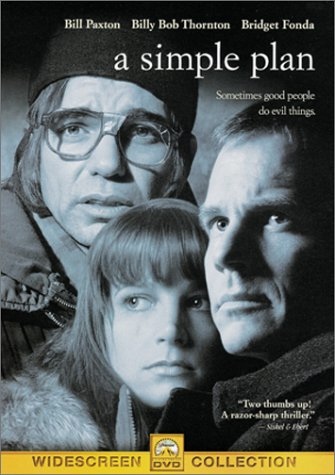
Director: Sam Raimi
Starring: Bill Paxton, Bridget Fonda, Billy Bob Thornton, Brent Briscoe, Jack Walsh
Genre: Drama
Studio: Paramount Theatrical: 1998 Rated:
R
Languages (Country): English ()
Summary: An endless white landscape of rolling hills and snow-blanketed forests. A lonely acoustic score (by Danny Elfman) playing in the background. A vision of rural simplicity portrayed in hushed tones. The stillness is about to shatter. Brothers Hank (Bill Paxton), an accountant at a small-town feed store, and Jacob (Billy Bob Thornton), an unemployed, hygienically challenged dim bulb, accompanied by Jacob's oafish pal Lou (Brent Briscoe), stumble across a downed plane in the brush containing a corpse and a sack containing millions of dollars--surely the aftermath of a drug deal, they conclude. Greed overcomes good sense, and the three agree to hide the money for a year and keep the secret to themselves. A simple plan indeed, and it doesn't take long for it to go all to hell as the lure of wealth tears at kinship and friendship, and the ruthless machinations of impetuous partners leave a body count in its wake. Bridget Fonda costars as Hank's wife, whose initial hesitation gives way to cold-blooded plotting. Sam Raimi, best known for wowing audiences with stylistic gymnastics and manic mayhem, directs this quietly desperate thriller with chilly restraint, finding its cold, tragic heart in the estranged relationship between Hank and Jacob: the college boy blind to the truth of his own family and the town loser whose tortured soul reveals a humanity lost on his brother (a brilliant performance by Thornton). Adapted by Scott B. Smith from his acclaimed novel. "--Sean Axmaker"

Director: Barbet Schroeder
Starring: Bridget Fonda, Jennifer Jason Leigh, Steven Weber, Peter Friedman, Stephen Tobolowsky
Genre: Drama
Studio: Sony Pictures Theatrical: 1992 Rated:
R
Languages (Country): English, French, Spanish ()
Summary: You can take this 1992 thriller one of two ways: it's either a highly suspenseful movie about an unfortunate young woman's psychological breakdown, or it's a glossy slasher movie starring two of Hollywood's best young actresses. Or maybe it's both at the same time--or perhaps it's the clever and well-acted thriller for its first hour before resorting to the routine shocks of a cheap horror flick. However you look at it, there's no denying that this is a dynamite showcase for Jennifer Jason Leigh as the roommate from hell who becomes the bane of Bridget Fonda's existence. First she picks up Fonda's mannerisms, then starts to borrow her wardrobe, cuts her hair to resemble Fonda's, and even "borrows" her roomie's boyfriend for a deceitful night of lovemaking. By that point Fonda's totally freaking out (wouldn't you?), and, well, that's when the whole thing gets a little too silly. Still, this is a nifty little shocker, and director Barbet Schroeder brings more intelligence and style to the material than it really deserves. Add that to the fine performances by the battling roommates and you've got a movie that will make you think twice before inviting total strangers to live with you. "--Jeff Shannon"
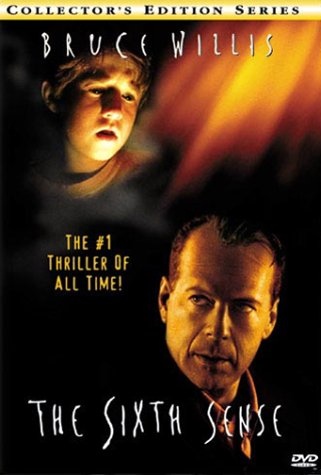
Director: M. Night Shyamalan
Starring: Firdous Bamji, Mischa Barton, Toni Collette, Janis Dardaris, Glenn Fitzgerald
Genre: Drama
Studio: Walt Disney Video Theatrical: 1999 Rated:
PG-13
Languages (Country): English, French ()
Summary: "I see dead people," whispers little Cole Sear (Haley Joel Osment), scared to affirm what is to him now a daily occurrence. This peaked 9-year old, already hypersensitive to begin with, is now being haunted by seemingly malevolent spirits. Child psychologist Malcolm Crowe (Bruce Willis) is trying to find out what's triggering Cole's visions, but what appears to be a psychological manifestation turns out to be frighteningly real. It might be enough to scare off a lesser man, but for Malcolm it's personal--several months before, he was accosted and shot by an unhinged patient, who then turned the gun on himself. Since then, Malcolm has been in turmoil--he and his wife (Olivia Williams) are barely speaking, and his life has taken an aimless turn. Having failed his loved ones and himself, he's not about to give up on Cole.
This third feature by M. Night Shyamalan sets itself up as a thriller, poised on the brink of delivering monstrous scares, but gradually evolves into more of a psychological drama with supernatural undertones. Many critics faulted the film for being mawkish and New Age-y, but no matter how you slice it, this is one mightily effective piece of filmmaking. The bare bones of the story are basic enough, but the moody atmosphere created by Shyamalan and cinematographer Tak Fujimoto made this one of the creepiest pictures of 1999, forsaking excessive gore for a sinisterly simple feeling of chilly otherworldliness. Willis is in his strong, silent type mode here, and gives the film wholly over to Osment, whose crumpled face and big eyes convey a child too wise for his years; his scenes with his mother (Toni Collette) are small, heartbreaking marvels. And even if you figure out the film's surprise ending, it packs an amazingly emotional wallop when it comes, and will have you racing to watch the movie again with a new perspective. You may be able to shake off the sentimentality of "The Sixth Sense", but its craftsmanship and atmosphere will stay with you for days. "--Mark Englehart"

Director: Jeannot Szwarc
Starring: Christopher Reeve, Jane Seymour, Christopher Plummer, Teresa Wright, Bill Erwin
Genre: Drama
Studio: Universal Studios Theatrical: 1980 Rated:
PG
Languages (Country): English, Spanish, French ()
Summary: It's silly, it's superficial, it's so desperately earnest about its tale of time-spanning love that you almost wish for a cheap flatulence gag just to break the solemn mood. But there's something so unabashedly gushy and entertaining about "Somewhere in Time" that you can't begrudge its enduring popularity. The film has become a staple of romantic-movie lovers since its release in 1980, and endless showings on cable TV have turned it into a dubious classic of sorts--a three-hanky weeper that anyone can enjoy as a guilty pleasure or a beloved favorite, with no apologies necessary.
In his first film after the star-making success of "Superman", Christopher Reeve stars as a contemporary playwright who visits a posh hotel and sees the portrait of an actress (Jane Seymour) who had performed there in 1912. He becomes obsessed with this beautiful woman and learns all he can about her, and then discovers a method of hypnotically transporting himself backward in time to meet her. "Is it ... you?" she says upon seeing the lovestruck playwright, and it's clearly a mutual attraction. But even the slightest reminder of the playwright's modern time can jar him from his seemingly real existence in the past, so his wonderful love affair is constantly just a step from being stolen away.
Based on Richard Matheson's novel "Bid Time Return", this flaky film may strain one's tolerance for plot holes and corny romance, but it's hard to deny its lasting appeal--and let's face it, guys, it'll make wives and girlfriends swoon if they're in a tearjerker mood. "--Jeff Shannon"
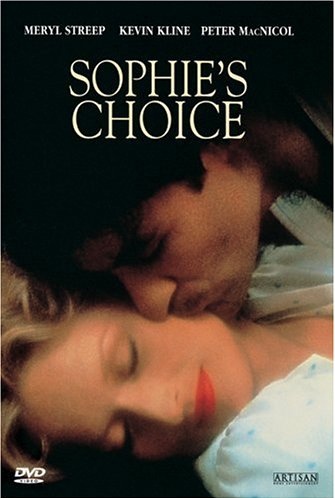
Director: Alan J. Pakula
Starring: Meryl Streep, Kevin Kline, Peter MacNicol, Rita Karin, Stephen D. Newman
Genre: Drama
Studio: Lions Gate Theatrical: 1982 Rated:
R
Languages (Country): English ()
Summary: The sunny streets of Brooklyn, just after World War II. A young would-be writer named Stingo (Peter MacNicol) shares a boarding house with beautiful Polish immigrant Sophie (Meryl Streep) and her tempestuous lover, Nathan (Kevin Kline); their friendship changes his life. This adaptation of the bestselling novel by William Styron is faithful to the point of being reverential, which is not always the right way to make a film come to life. But director Alan J. Pakula ("All the President's Men") provides a steady, intelligent path into the harrowing story of Sophie, whose flashback memories of the horrors of a Nazi concentration camp form the backbone of the movie. Streep's exceptional performance--flawless Polish accent and all--won her an Oscar, and effectively raised the standard for American actresses of her generation. No less impressive is Kevin Kline, in his movie debut, capturing the mercurial moods of the dangerously attractive Nathan. The two worlds of "Sophie's Choice", nostalgic Brooklyn and monstrous Europe, are beautifully captured by the gifted cinematographer Néstor Almendros, whose work was Oscar-nominated but didn't win. It should have. "--Robert Horton"

Director: David Mamet
Starring: Steve Martin, Ben Gazzara, Campbell Scott, Rebecca Pidgeon, Ricky Jay
Genre: Drama
Studio: Sony Pictures Theatrical: 1998 Rated:
PG
Languages (Country): English, Spanish, French ()
Summary: Campbell Scott plays a green young technocrat who invents a secret and highly successful high-tech process that, it appears, most of the free world would like to get their hands on. His own company may not be dealing with him fairly, and competitors are lurking around every street corner and kiddie carousel in New York (not to mention Caribbean hideaways) hoping to steal, cajole, or trick him out of the formula. The plot is as full of switchbacks as a mountain highway, and the delights are in watching it unfold around Scott, who is not so much of a naif that he doesn't catch on that not only his formula, but his life, are in dire danger. Steve Martin is consummately assured--and scary as hell--as a wealthy big shot determined to come out on top. David Mamet's script is refreshingly free from his trademark mannerisms; it's his most satisfying film since 1987's "House of Games". "--Anne Hurley"

Director: Martin Scorsese
Starring: Diahnne Abbott, Frank Adu, Gino Ardito, Victor Argo, Garth Avery
Genre: Drama
Studio: Sony Pictures Theatrical: 1976 Rated:
R
Languages (Country): English, French ()
Summary: "Taxi Driver" is the definitive cinematic portrait of loneliness and alienation manifested as violence. It is as if director Martin Scorsese and screenwriter Paul Schrader had tapped into precisely the same source of psychological inspiration ("I just knew I had to make this film," Scorsese would later say), combined with a perfectly timed post-Watergate expression of personal, political, and societal anxiety. Robert De Niro, as the tortured, ex-Marine cab driver Travis Bickle, made movie history with his chilling performance as one of the most memorably intense and vividly realized characters ever committed to film. Bickle is a self-appointed vigilante who views his urban beat as an intolerable cesspool of blighted humanity. He plays guardian angel for a young prostitute (Jodie Foster), but not without violently devastating consequences. This masterpiece, which is not for all tastes, is sure to horrify some viewers, but few could deny the film's lasting power and importance. "--Jeff Shannon"

Director: John McTiernan
Starring: Pierce Brosnan, Rene Russo, Denis Leary, Ben Gazzara, Frankie Faison
Genre: Drama
Studio: MGM (Video & DVD) Theatrical: 1999 Rated:
R
Languages (Country): English, French ()
Summary: For the Hollywood remake rule, which dictates that an update of an older film be inferior to the original in almost every aspect, "The Thomas Crown Affair" stands as a glorious exception. The original 1968 film, starring a dapper Steve McQueen and a radiant Faye Dunaway, was a diverting pop confection of mod clothes and nifty break-ins, but not much more. John McTiernan's new version, though, cranks up the entertainment factor to mach speed, turning what was a languid flick into a high-adrenaline caper romance. Thomas Crown (Pierce Brosnan) is now a man of industry who likes to indulge in a little high-priced art theft on the side; Catherine Banning (Rene Russo) is the insurance investigator determined to get on his tail in more ways than one. If you're thinking cat-and-mouse game, think again--it's more like cat vs. smarter cat, as both the thief and the investigator try to outwit each other and "nothing" is off-limits, especially after they start a highly charged love affair that's a heated mix of business and pleasure.
What makes this "Thomas Crown" more enjoyable than its predecesor is McTiernan's attention to detail in both the set action pieces (no surprise from the man who helmed "Die Hard" with precision accuracy) and the developing romance, the witty and intelligent script by Leslie Dixon (she wrote the love scenes) and Kurt Wimmer (he wrote the action scenes), and, most of all, its two stunning leads (both over 40 to boot), combustible both in and out of bed. Brosnan, usually held prisoner in the James Bond straitjacket, lets loose with both a relaxed sensuality and a comic spirit he's rarely expressed before. The film, however, pretty much belongs to Russo, who doesn't just steal the spotlight, but bends it to her will. Beautiful, stylish, smart, self-possessed, incredibly sexy, she's practically a walking icon; it's no wonder Crown falls for her hook, line, and sinker. With Denis Leary as a police detective smitten with Russo, and Faye Dunaway in a throwaway but wholly enjoyable cameo as Brosnan's therapist. "--Mark Englehart"

Director: Steven Soderbergh
Starring: Steven Bauer, Benjamin Bratt, James Brolin, Don Cheadle, Benicio Del Toro
Genre: Drama
Studio: Polygram USA Video Theatrical: 2000 Rated:
R
Languages (Country): English ()
Summary: Featuring a huge cast of characters, the ambitious and breathtaking "Traffic" is a tapestry of three separate stories woven together by a common theme: the war on drugs. In Ohio, there's the newly appointed government drug czar (Michael Douglas) who realizes after he's accepted the job that he may have gotten into a no-win situation. Not only that, his teenage daughter (Erika Christensen) is herself quietly developing a nasty addiction problem. In San Diego, a drug kingpin (Steven Bauer) is arrested on information provided by an informant (Miguel Ferrer) who was nabbed by two undercover detectives (Don Cheadle and Luis Guzmán). The kingpin's wife (Catherine Zeta-Jones), heretofore ignorant of where her husband's wealth comes from, gets a crash course in the drug business and its nasty side effects. And south of the border, a Mexican cop (Benicio Del Toro) finds himself caught between both his home country and the U.S., as corrupt government officials duke it out with the drug cartel for control of trafficking various drugs back and forth across the border.
Bold in scope, "Traffic" showcases Steven Soderbergh at the top of his game, directing a peerless ensemble cast in a gritty, multifaceted tale that will captivate you from beginning to end. Utilizing the no-frills techniques of the Dogme 95 school, Soderbergh enhances his hand-held filming with imaginative editing and film-stock manipulation that eerily captures the atmosphere of each location: a washed-out, grainy Mexico; a blue and chilly Ohio; and a sleek, sun-dappled San Diego. But "Traffic" is more than a film-school exercise. Soderbergh and screenwriter Stephen Gaghan (adapting the British TV miniseries "Traffik" to the U.S.) seamlessly weave the threads of each separate plotline into one solid tale, with the actions of one plot having quiet repercussions on the other two. And if you needed more proof that Soderbergh takes unparalleled care with his actors, practically all the members of this cast turn in their best work ever, the standout being an Oscar-worthy Del Toro as the conflicted moral conscience of the film. While no story is fully resolved in the film, you'll be haunted by these characters days after you've seen the film. By far one of the best movies of 2000. "--Mark Englehart"
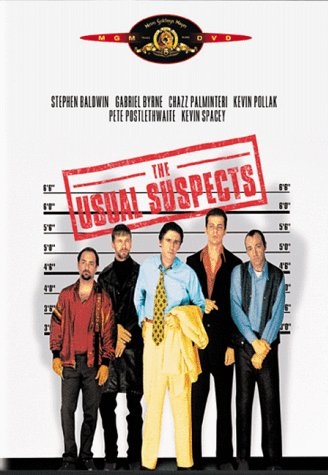
Director: Bryan Singer
Starring: Stephen Baldwin, Gabriel Byrne, Benicio Del Toro, Kevin Pollak, Kevin Spacey
Genre: Drama
Studio: MGM (Video & DVD) Theatrical: 1995 Rated:
R
Languages (Country): English, French ()
Summary: Ever since this convoluted thriller dazzled audiences and critics in 1995 and won an Oscar for Christopher McQuarrie's twisting screenplay, "The Usual Suspects" has continued to divide movie lovers into opposite camps. While a lot of people take great pleasure from the movie's now-famous central mystery (namely, "Who is Keyser Söze?"), others aren't so easily impressed by a movie that's too enamored of its own cleverness to make much sense. After all, what are we to make of a final scene that renders the entire movie obsolete? Half the fun of "The Usual Suspects" is the debate it provokes and the sheer pleasure of watching its dynamic cast in action, led (or should we say, misled) by Oscar winner Kevin Spacey as the club-footed con man who recounts the saga of enigmatic Hungarian mobster Keyser Söze. Spacey's in a band of thieves that includes Gabriel Byrne, Stephen Baldwin, Kevin Pollak, and Benicio Del Toro, all gathered in a plot to steal a large shipment of cocaine. The story is told in flashback as a twisted plot being described by Spacey's character to an investigating detective (Chazz Palmintieri), and "The Usual Suspects" is enjoyable for the way it keeps the viewer guessing right up to its surprise ending. Whether that ending will enhance or extinguish the pleasure is up to each viewer to decide. Even if it ultimately makes little or no sense at all, this is a funny and fiendish thriller, guaranteed to entertain even its vocal detractors. "--Jeff Shannon"
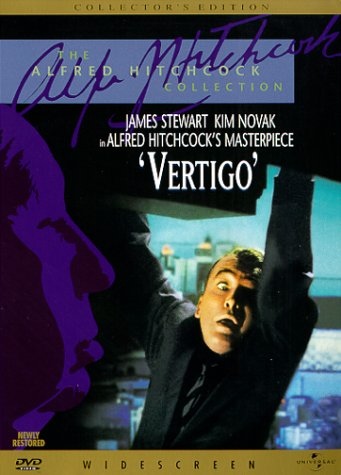
Director: Alfred Hitchcock
Starring: James Stewart, Kim Novak, Barbara Bel Geddes, Tom Helmore, Henry Jones
Genre: Drama
Studio: Universal Studios Theatrical: 1958 Rated:
PG
Languages (Country): English ()
Summary: Although it wasn't a box-office success when originally released in 1958, "Vertigo" has since taken its deserved place as Alfred Hitchcock's greatest, most spellbinding, most deeply personal achievement. In fact, it consistently ranks among the top 10 movies ever made in the once-a-decade "Sight & Sound" international critics poll, placing at number 4 in the most recent survey. (Universal Pictures' spectacularly gorgeous 1996 restoration and rerelease of this 1958 Paramount production was a tremendous success with the public, too.) James Stewart plays a retired police detective who is hired by an old friend to follow his wife (a superb Kim Novak, in what becomes a double role), whom he suspects of being possessed by the spirit of a dead madwoman. The detective and the disturbed woman fall ("fall" is indeed the operative word) in love and...well, to give away any more of the story would be criminal. Shot around San Francisco (the Golden Gate Bridge and the Palace of the Legion of Honor are significant locations) and elsewhere in Northern California (the redwoods, Mission San Juan Batista) in rapturous Technicolor, "Vertigo" is as lovely as it is haunting. "--Jim Emerson"
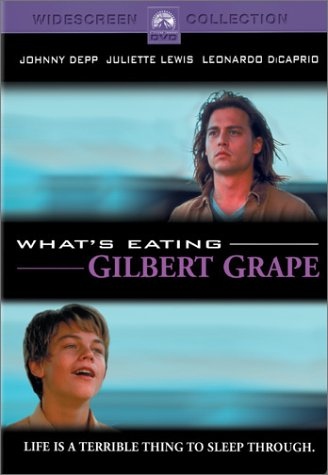
Director: Lasse Hallström
Starring: Johnny Depp, Leonardo DiCaprio, Juliette Lewis, Mary Steenburgen, Darlene Cates
Genre: Drama
Studio: Paramount Theatrical: 1993 Rated:
PG-13
Languages (Country): English ()
Summary: This is the movie that Leonardo DiCaprio received an Oscar nomination for, five years before "Titanic". And, in fact, this is the movie that should have made him a star, he's so good in it. Based on the novel by Peter Hedges (who adapted his own book) and directed by Lasse Hallström ("My Life as a Dog"), this is the funny, moody tale of a young man named Gilbert Grape (Johnny Depp) who lives at home in a small town with his 500-pound Momma (beautifully played by nonpro Darlene Cates), his mentally retarded younger brother Arnie (DiCaprio, utterly convincing), and his sisters. Not a lot happens--Arnie keeps climbing a water tower and getting stuck; Gilbert is involved with a married woman (Mary Steenburgen), then meets a nice new girl in town who's closer to his age (Juliette Lewis). And that's exactly what makes this movie so much more than your run-of-the-mill Hollywood product: it's not about some mechanical, formulaic plot; it's about these characters, and it allows you to spend some time with them and get to know them. Depp may have started out as a TV teen idol on "21 Jump Street", but his feature film choices since then--in such wonderfully offbeat and diverse movies as "Cry-Baby", "Edward Scissorhands", "Benny & Joon", "Donnie Brasco"--have made him one of the most interesting, unpredictable, and risk-taking young actors in American movies. "--Jim Emerson"